UNDERSTANDING THE NERVOUS SYSTEM
An Introduction to Polyvagal Theory
A Client Reference Guide from The Body-Based Mindfulness Center
What Is Polyvagal Theory?
Polyvagal Theory is often described as “the science of connection” — the science of feeling safe enough to fully engage with life. Developed by neuroscientist Dr. Stephen Porges and translated into practical clinical language by Deb Dana, LCSW, it explains how your autonomic nervous system — the part of you that operates beneath conscious thought — is constantly scanning for cues of safety or danger, and shaping how you think, feel, and connect as a result.
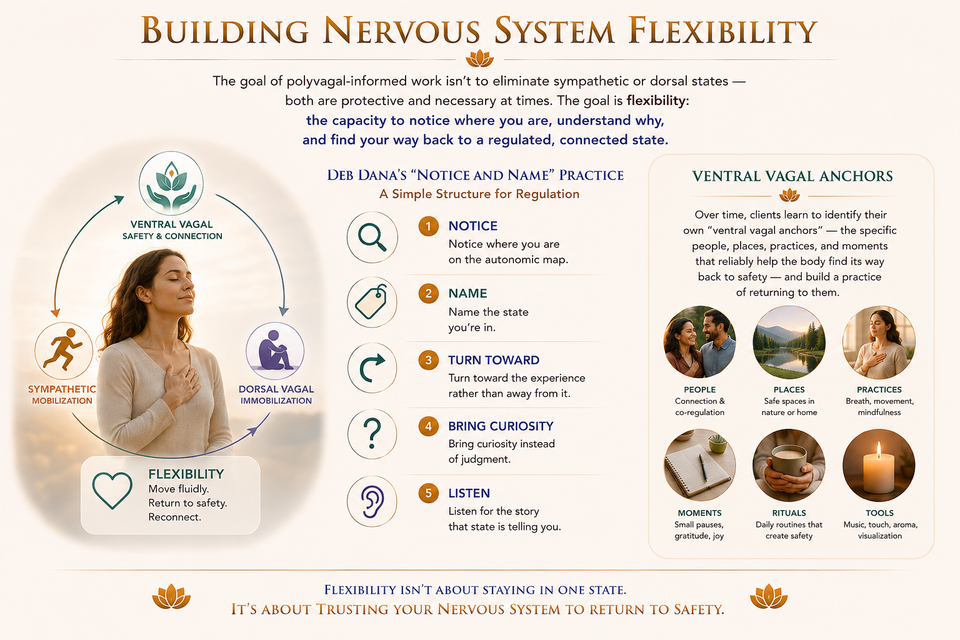
Understanding this system is foundational to trauma recovery. As Dr. Porges has written, “Trauma is a chronic disruption of connectedness.” Trauma isn't only held in your thoughts — it's held in your body's autonomic state. Healing, from this lens, means helping the nervous system relearn what safety feels like.
Three Organizing Principles
Polyvagal Theory is often described as “the science of connection” — the science of feeling safe enough to fully engage with life. Developed by neuroscientist Dr. Stephen Porges and translated into practical clinical language by Deb Dana, LCSW, it explains how your autonomic nervous system — the part of you that operates beneath conscious thought — is constantly scanning for cues of safety or danger, and shaping how you think, feel, and connect as a result.
Understanding this system is foundational to trauma recovery. As Dr. Porges has written, “Trauma is a chronic disruption of connectedness.” Trauma isn't only held in your thoughts — it's held in your body's autonomic state. Healing, from this lens, means helping the nervous system relearn what safety feels like.
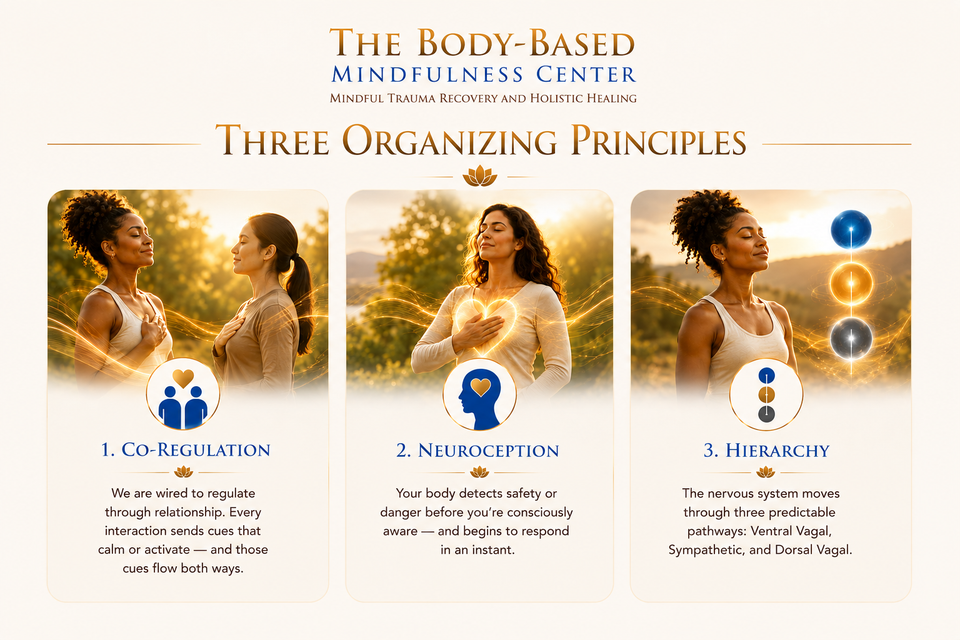
Three Organizing Principles
- 1. Co-Regulation. Your nervous system is wired to regulate through relationship, not in isolation. Every interaction sends cues that either calm or activate the people around you — and theirs do the same to you.
- 2. Neuroception. Before you're consciously aware of it, your body has already detected whether your surroundings, your relationships, or your own internal state feel safe or unsafe — and it has already begun to respond.
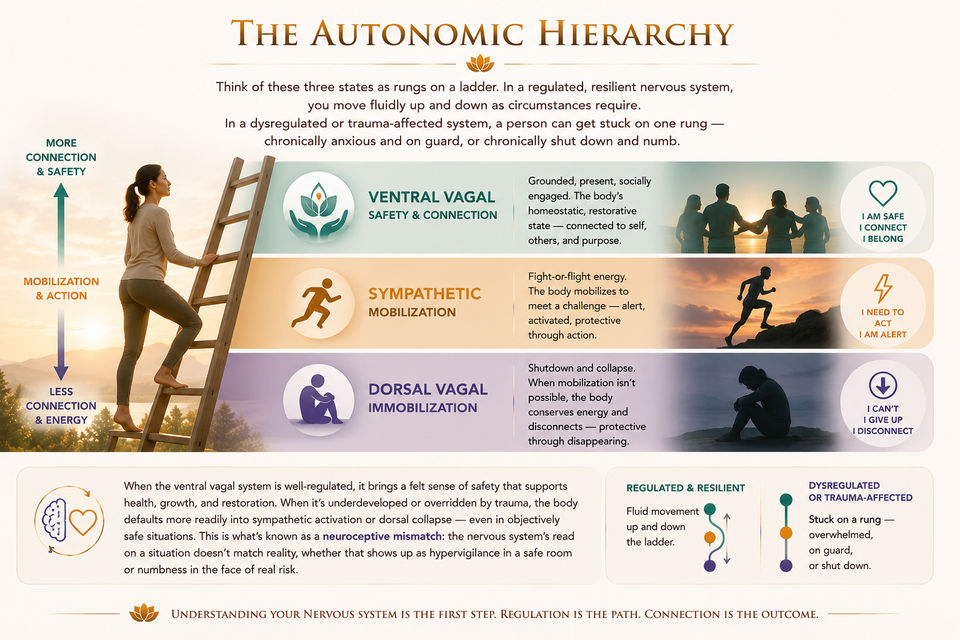
- 3. Hierarchy. The nervous system moves through three predictable pathways of response: Ventral Vagal (safety), Sympathetic (mobilization), and Dorsal Vagal (immobilization).